
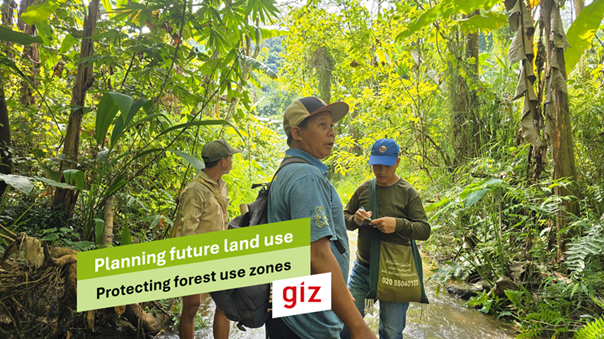
Participatory Land Use Planning (PLUP) in Phonkham Village, Hiem District, Houaphanh Province
From 14–18 November 2025, the GIZ’s Climate Change Protection Through Avoided Deforestation (CliPAD) project worked hand in hand with Phonkham villagers and district partners to carry out the Participatory Land Use Planning (PLUP) process. This activity represents an essential foundation for village-level natural resource governance, helping communities reflect on how their land and forests are used today and how they should be protected for the future. The opening sessions introduced the purpose of PLUP and emphasized its importance to local development, particularly in a province known for its rich forest landscapes and biodiversity. Through these discussions, villagers gained a clearer understanding of their responsibilities in managing natural resources, while also recognizing the long-term benefits of sustainable land-use planning.
Throughout the week, the community and district technical teams collaborated closely across several key steps, including detailed area surveys, community consultations, participatory mapping exercises, and the development of community agreements for forest and land management. These activities ensured that local knowledge, cultural practices, and livelihood needs were reflected in the planning process. Villagers actively contributed to identifying the three types of forest areas, discussing biodiversity priorities, and agreeing on future land-use zones. The participatory mapping in particular created an opportunity for open dialogue, where different generations shared their understanding of fields, forest boundaries, water sources, and areas of cultural significance. This strengthened community ownership and helped build a shared vision for the village’s natural resources. By the end of the activity, the PLUP process had not only produced a technically sound land-use plan but also helped reinforce trust, local leadership, and collective responsibility among villagers. The strong participation demonstrated the community’s commitment to protecting their forests, safeguarding biodiversity, and supporting long-term climate resilience in Houaphanh Province. Protecting forests and biodiversity is a shared responsibility, and PLUP serves as a practical tool that empowers villagers to make informed decisions that support a healthier and more sustainable environment for future generations.
ການວາງແຜນ ການນໍາໃຊ້ ທີ່ດິນແບບມີສ່ວນຮ່ວມ (PLUP) ບ້ານໂພນຄຳ ເມືອງຮ້ຽມ, ແຂວງຫົວພັນ
ລະຫວ່າງວັນທີ 14–18 ພະຈິກ 2025, ໂຄງການ ການປົກປ້ອງກັນດິນຟ້າອາກາດ ໂດຍການຫຼີກລ້ຽງການທໍາລາຍປ່າໄມ້ (CliPAD) ຂອງ ອົງການ GIZ ໄດ້ຮ່ວມເຮັດວຽກຢ່າງໃກ້ຊິດກັບສະມາຊິກບ້ານໂພນຄຳ ແລະ ພາກສ່ວນເມືອງ ໃນການວາງແຜນ ການນໍາໃຊ້ ທີ່ດິນແບບມີສ່ວນຮ່ວມ (PLUP). ກິດຈະກຳນີ້ເປັນພື້ນຖານສຳຄັນຕໍ່ການຄຸ້ມຄອງຊັບພະຍາກອນທ້ອງຖິ່ນໃນລະດັບບ້ານ ໂດຍສົ່ງເສີມໃຫ້ຊຸມຊົນພິຈາລະນາເຖິງວິທີການໃຊ້ທີ່ດິນ ແລະ ປ່າໄມ້ໃນປັດຈຸບັນ ພ້ອມທັງການກຳນົດວ່າຈະປົກປ້ອງແລະໃຊ້ປະໂຫຍດຢ່າງໃດໃນອະນາຄົດ. ໃນຊ່ວງເປີດກິດຈະກຳໄດ້ອະທິບາຍຈຸດປະສົງຂອງ PLUP ແລະ ເນັ້ນຢ້ຳຄວາມສຳຄັນຕໍ່ການພັດທະນາທ້ອງຖິ່ນ ເປັນພິເສດໃນແຂວງທີ່ມີປ່າໄມ້ອຸດົມສົມບູນແລະຄວາມຫຼາກຫຼາຍທາງຊີວະນາ. ຜ່ານການສົນທນາແລະການອະທິບາຍຕ່າງໆ ຊາວບ້ານໄດ້ເຂົ້າໃຈບົດບາດຂອງຕົນເອງໃນການຄຸ້ມຄອງຊັບພະຍາກອນ ແລະ ຮັບຮູ້ຜົນປະໂຫຍດລະຍະຍາວຂອງການວາງແຜນໃຊ້ທີ່ດິນແບບຍືນຍົງ.
ໃນຊ່ວງການດຳເນີນງານ 1 ອາທິດ, ຊຸມຊົນ ແລະ ທີມເທັກນິກເມືອງໄດ້ຮ່ວມມືກັນໃນຂັ້ນຕອນສຳຄັນຕ່າງໆ ເຊັ່ນ ການສຳຫຼວດພື້ນທີ່, ການປຶກສາຫາລືຊຸມຊົນ, ການຈັດເຮັດແຜນທີ່ແບບມີສ່ວນຮ່ວມ ແລະ ຈັດເຮັດຂໍ້ຕົກລົງຊຸມຊົນກ່ຽວກັບການຈັດການປ່າແລະທີ່ດິນ. ຂັ້ນຕອນເຫຼົ່ານີ້ໄດ້ຮັບປະກັນວ່າຄວາມຮູ້ທ້ອງຖິ່ນ, ວັດທະນະທຳ ແລະ ຄວາມຕ້ອງການການດຳລົງຊີວິດຂອງຊາວບ້ານໄດ້ຖືກສະທ້ອນໃນແຜນ. ຊາວບ້ານໄດ້ມີສ່ວນຮ່ວມໃນການຈຳແນກພື້ນທີ່ປ່າ 3 ປະເພດ, ພິຈາລະນາດ້ານຄວາມຫຼາກຫຼາຍທາງຊີວະນາ ແລະ ກຳນົດໂຊນໃຊ້ທີ່ດິນໃນອະນາຄົດ. ການຈັດເຮັດແຜນທີ່ແບບມີສ່ວນຮ່ວມເປັນພື້ນທີ່ໃຫ້ການສົນທນາທີ່ເປີດກວ້າງ ແລະ ເປັນໂອກາດໃຫ້ຊຸມຊົນຮ່ວມແບ່ງປັນຄວາມຮູ້ຂ້າມຮຸ່ນ. ການດຳເນີນ PLUP ໄດ້ສຳເລັດຜົນຢ່າງດີ ໂດຍສ້າງຄວາມເຊື່ອມໂຍງ ແລະ ຄວາມເຊື່ອມໃຈລະຫວ່າງຊາວບ້ານ. ຊາວບ້ານສະແດງໃຫ້ເຫັນຄວາມມຸ່ງມັ້ນໃນການປົກປ້ອງປ່າໄມ້, ອະນຸລັກຄວາມຫຼາກຫຼາຍທາງຊີວະນາ ແລະ ສ້າງຄວາມຕ້ານທານຕໍ່ການປ່ຽນແປງສະພາບອາກາດໃນແຂວງຫົວພັນ. ການປົກປ້ອງປ່າແລະສິ່ງແວດລ້ອມແມ່ນພາລະກິດຮ່ວມກັນ ແລະ PLUP ແມ່ນເຄື່ອງມືທີ່ຊ່ວຍໃຫ້ຊຸມຊົນມີອຳນາດໃນການຕັດສິນໃຈ ເພື່ອສ້າງສິ່ງແວດລ້ອມທີ່ຍືນຍົງສຳລັບອະນາຄົດ.