
Nahieng village is in the high land of Xamtay District Houaphan Province with a total area of 4,364.27 hectares, and roughly 27 kilometers from the city. The village is Hmong ethnic group, and their main activity is cropping.
The CliPAD project began implementation in Nahieng village in 2021, and it successfully implemented several key activities in the village, including: Free Prior Informed Consent (FPIC), Participatory Land Use Planning (PLUP), Village Forest and Agriculture Grants (VFAG), Promotion of Sustainable Agriculture Practices (PSAP), Village Forest Management Plan (VFMP).
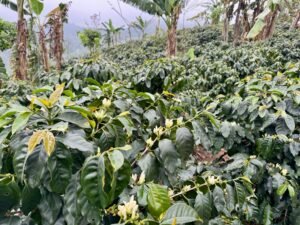
Through these activities, the village’s land has been systematically categorized, allocating 3,414.15 Hectares for agriculture land, 870.66 hectares for forest land and 85.43 Hectares for other land out of the total village area of 4,364.27 hectares. To bolster local livelihood, the project provided 10,794 Euros to 29 target families. This investment budget is to support agriculture activities including 21 households planting coffee, 6 households planting tea, and 2 households planting galanga.
Additionally, from 2022 to the present, the village received a cash for work budget of 6,869 Euros to support its Annual Operation Plan (AOP). This budget was utilized for forest boundary demarcation, forest patrolling, fire monitoring and control and assisting natural regeneration. Furthermore, in 2025 the village successfully met forest cover assessment criteria, and it was awarded a performance bonus of 9,717 Euros.
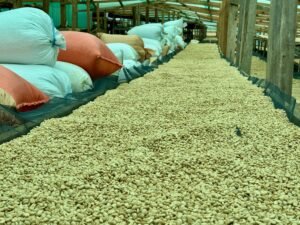
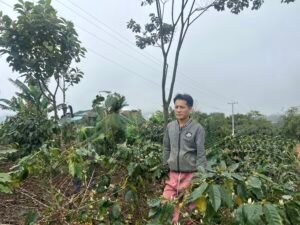
Finally, the agricultural activities of 29 participating families are now yielding market – ready products. Coffee production has been particularly successful, with an average harvest of approximately 1.5 tons per household, expected to generate around 30–40 million LAK in income this year. However, the village plans to use 80% of the bonus payment as Village Development Fund (VDF) which villagers can access as low-interest loans to improve their livelihoods and 20% to implement forestry activities. “Coffee cropping significantly helps our villagers improve their livelihoods.,” stated Mr. Houawa, the Village Chief of Nahieng.
Nahieng village, nestled in the highlands of Xamtay District, Houaphan Province, covers a total area of 4,364.27 hectares and lies approximately 27 kilometers from the district center. Home to a Hmong community, the village has long relied on agriculture as its primary livelihood. Today, it stands as a strong example of how sustainable development initiatives can transform rural communities.
Since 2021, the CliPAD project has been working closely with Nahieng village to promote inclusive, sustainable land and forest management. Through key processes such as Free, Prior and Informed Consent (FPIC) and Participatory Land Use Planning (PLUP), villagers have actively shaped decisions about their land and resources. Complementary initiatives including Village Forest and Agriculture Grants (VFAG), the Promotion of Sustainable Agriculture Practices (PSAP), and the Village Forest Management Plan (VFMP) have further strengthened local capacity and ownership.
As a result, land use in Nahieng is now clearly defined and sustainably managed. Of the total village area, 3,414.15 hectares have been allocated to agriculture, 870.66 hectares to forest conservation, and 85.43 hectares to other uses. This structured approach has not only improved land governance but also laid the foundation for long-term environmental protection and livelihood development.
To support economic growth, the project invested 10,794 Euros in 29 target households, enabling them to diversify and expand their agricultural activities. Among them, 21 households are cultivating coffee, 6 are growing tea, and 2 are producing galanga. In addition, from 2022 to the present, the village has benefited from 6,869 Euros under the Cash for Work scheme to implement its Annual Operation Plan. These activities include forest boundary demarcation, regular forest patrolling, fire prevention and control, and assisted natural regeneration.
The village’s strong commitment to forest protection and sustainable practices was recognized in 2025, when Nahieng successfully met forest cover assessment criteria and was awarded a performance-based bonus of 9,717 Euros. Demonstrating forward-thinking leadership, the community agreed to allocate 80% of this bonus to a Village Development Fund (VDF), offering low-interest loans to support livelihood improvements, while the remaining 20% will continue to fund forestry activities.
Today, the results of these collective efforts are becoming visible. The 29 participating households are now producing market-ready agricultural products, with coffee emerging as a standout success. On average, each household harvests approximately 1.5 tons of coffee, generating an estimated income of 30–40 million LAK this year. This marks a significant step forward in improving household incomes and economic resilience.
“Coffee cultivation has significantly improved the livelihoods of our villagers,” shared Mr. Houawa, the Village Chief of Nahieng. Nahieng village’s experience demonstrates how empowering communities, strengthening land governance, and investing in sustainable practices can deliver tangible and lasting benefits. It serves as an inspiring model for other rural communities striving toward sustainable development and improved livelihoods.